When Timing Drives Every Decision
Tenant improvement projects leave very little margin for error. Move-in dates are scheduled well in advance, furniture deliveries are locked in, and business operations depend on construction finishing on time. For this project, the end-of-quarter deadline was fixed, which meant every phase required careful coordination and disciplined execution.
Early planning focused on understanding the client’s priorities and constraints. Clear communication, dependable phasing, and a clean handoff mattered just as much as the finished space. Aligning on those expectations at the outset helped guide decisions throughout the build.
Planning for Progress, Not Just Speed
Scheduling played a central role in maintaining momentum. The work was broken into clear weekly targets that allowed progress to be tracked consistently. Regular site walks created opportunities to address details early, while ongoing check-ins kept teams aligned as conditions evolved.
Punch items were managed as part of the workflow rather than saved for the end. Addressing issues as work progressed helped avoid last-minute pressure and reduced the risk of delays near closeout.
Navigating Challenges Without Losing Momentum
Unexpected conditions surfaced during construction when underground utility conflicts required adjustments to the original plan. Resolving the issue required coordination across multiple parties and quick decision-making to prevent schedule impacts.
Rerouting options were evaluated, updates were communicated clearly, and the schedule was adjusted without disrupting overall progress. The ability to adapt while maintaining clarity allowed work to continue without sacrificing quality or confidence.
A Closeout That Reflected the Process
Preparation throughout the project shaped how closeout unfolded. Final walkthroughs focused on verification rather than correction, and turnover moved forward without the stress that often accompanies compressed timelines.
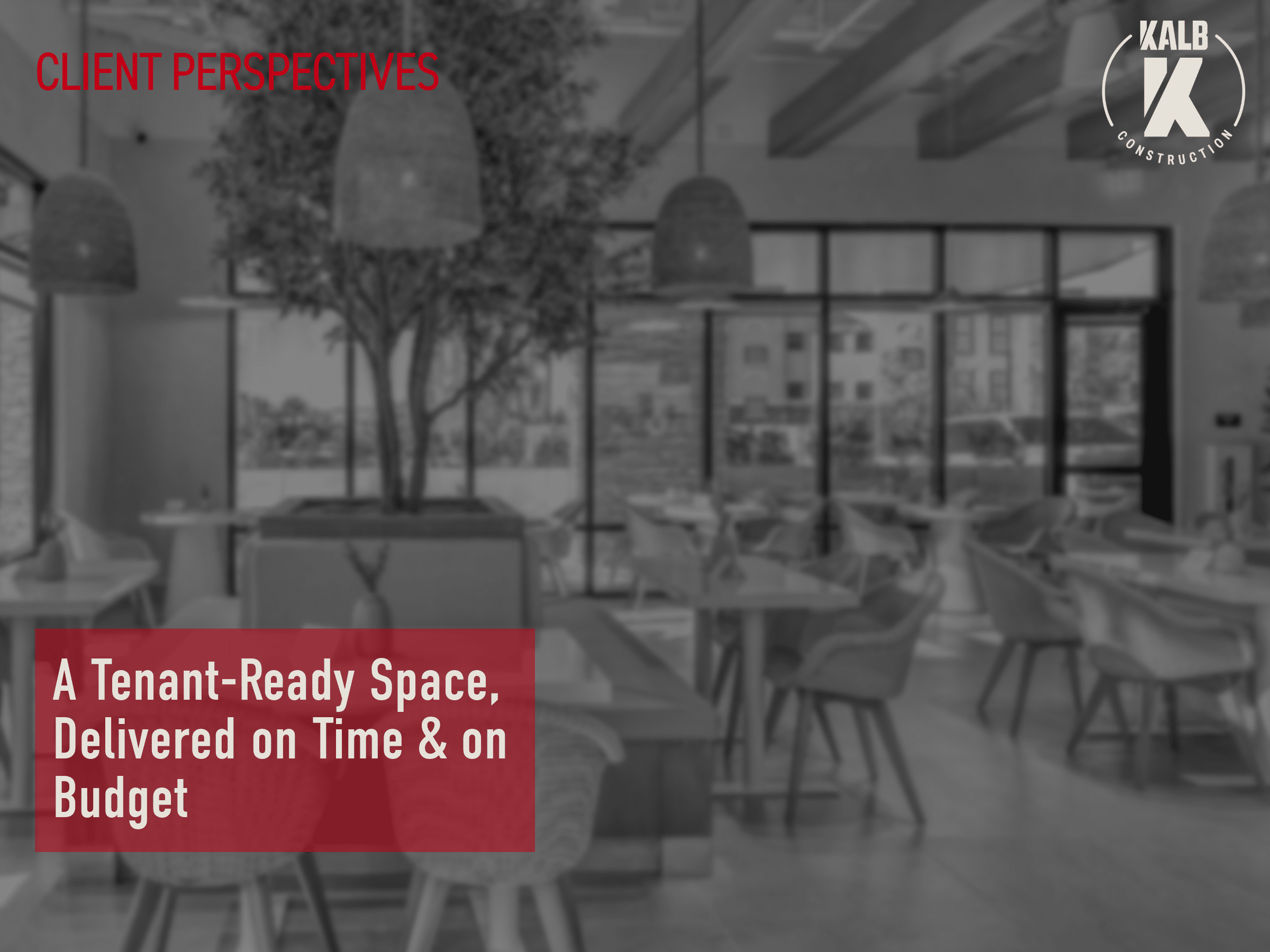
The space was completed as scheduled, fully functional, and ready for occupancy. Delivery happened with confidence instead of urgency.
A Process Clients Can Rely On
Client feedback from this project reflected the value of consistency. Communication remained clear throughout the build, responsibilities were easy to understand, and next steps were always known. A steady process allowed the client to focus on operations rather than managing construction uncertainty.
A tenant-ready space represents more than a finished interior. A controlled, well-managed process creates confidence from kickoff through move-in and supports successful outcomes long after construction wraps.